Key points
- A parent who can stand and dress does well in a pull-up, and someone changed in bed is easier to care for in a brief with tabs.
- Changing only a Hyper insert, instead of the whole brief, often keeps the outer garment dry.
- MedlinePlus says to clean and dry the skin right away after a leak and to reapply a barrier cream with zinc oxide, lanolin or petrolatum.
- The National Institute on Aging suggests bathroom reminders every two to three hours, with disposable briefs and washable bed protectors.
Start with a doctor, not a pack
Before you settle on any product, get your parent in front of a doctor or nurse. MedlinePlus puts it first in its advice on incontinence products: talk with a provider about the cause of the leakage and the options for treating it. In its guidance for families caring for someone with Alzheimer's disease, the National Institute on Aging says most people with the disease will have incontinence at some point. A doctor can help figure out why it is happening, and sometimes treat it.
That visit also helps with the bills. MedlinePlus notes that insurance may pay for pads and other incontinence supplies when a provider has written a prescription for them, so ask about it while you are in the room. Note when the leaks happen and roughly how much comes each time. Those two things, the same page says, decide which product fits.
Products are how your parent stays dry and comfortable while the cause is being looked into. They are not the treatment. Keep both tracks running side by side, and go back to the doctor with what you have noticed rather than settling for a bigger pack as the only answer.
Pull-up or brief with tabs: who does the changing
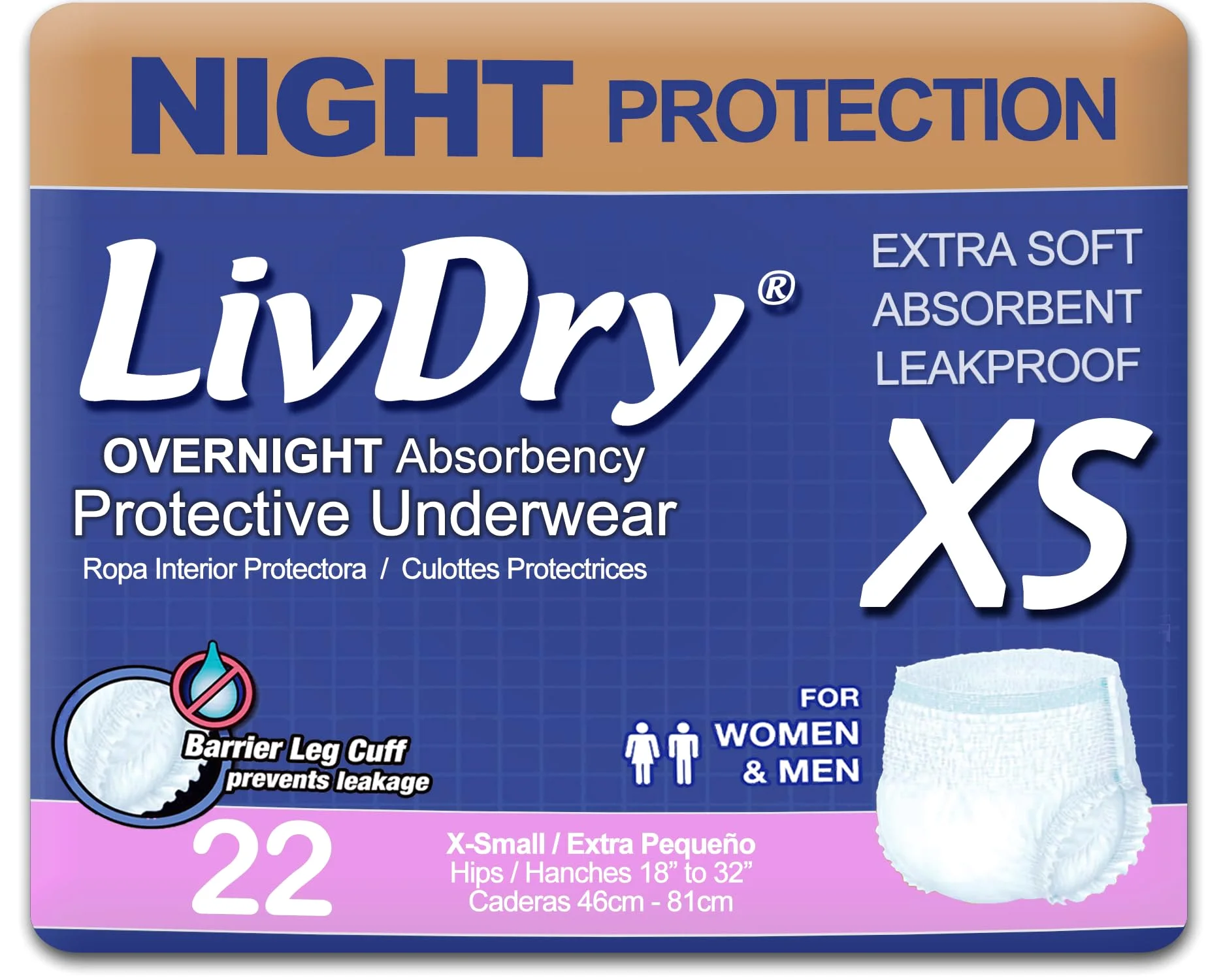
The choice between a pull-up and a brief with tabs is less about capacity than about who puts it on, and where. A pull-up, the product many families still call an adult diaper, goes on like underwear. If your mother or father can stand, step in and pull it up, a pull-up keeps that bit of independence, and its sides tear open for a quick change. Our pull-ups run from Extra Absorbency for moderate days to Ultimate, our highest pull-up at 2,422 mL (81.9 oz).
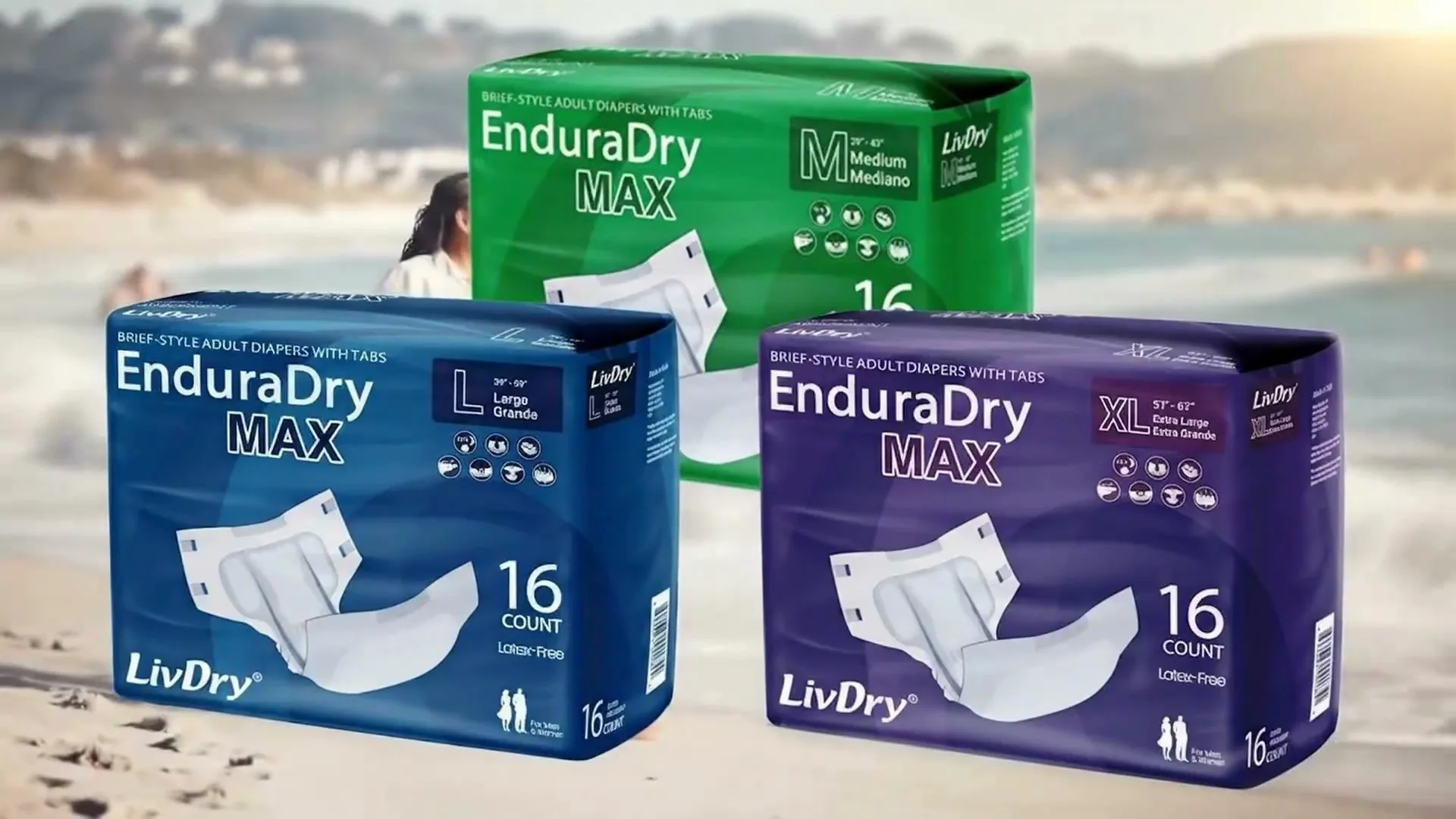
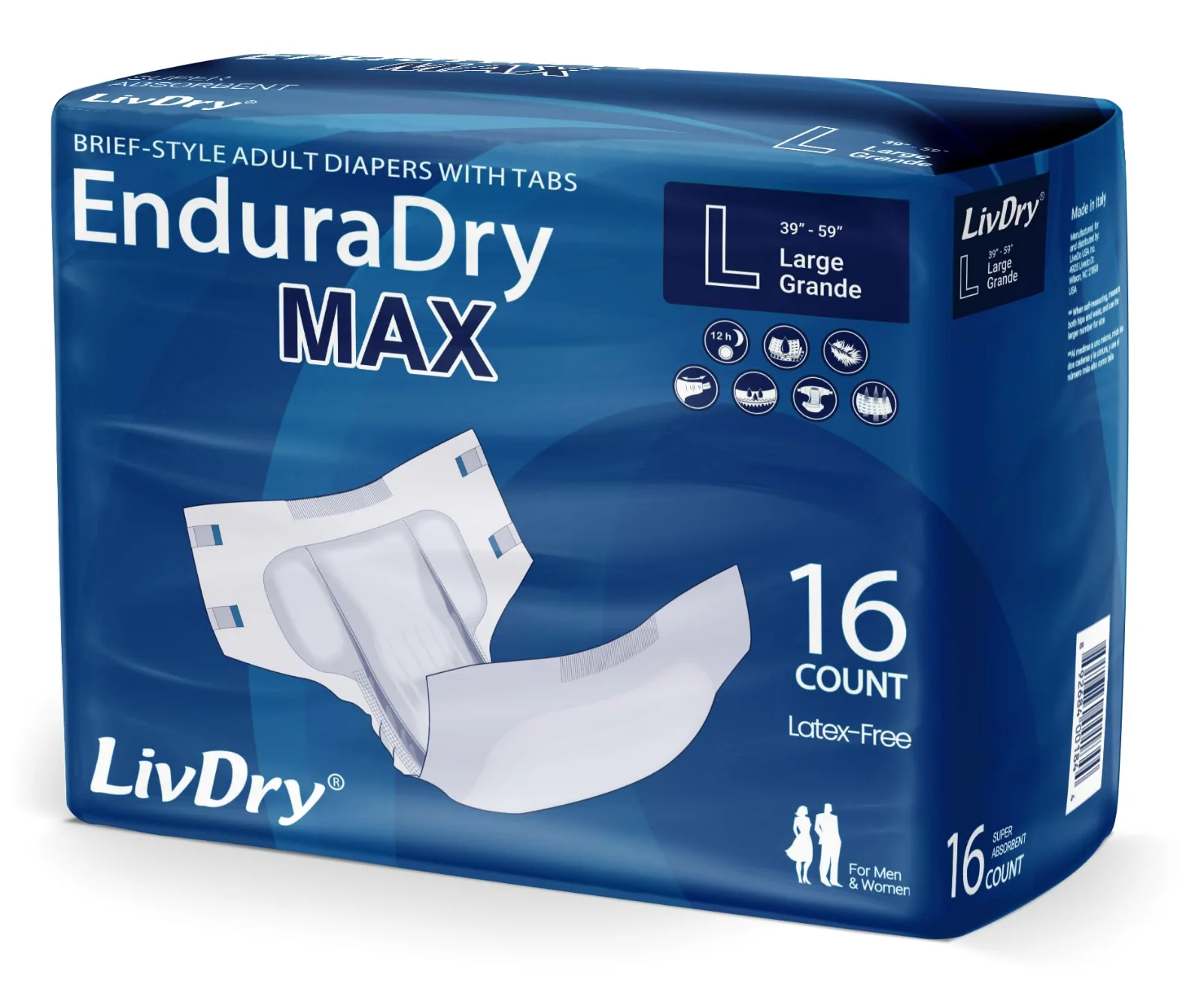
A brief with tabs opens flat. It can go on while someone lies in bed, which a pull-up cannot do, and the tabs fasten at the hips and reopen to adjust the fit. That makes it the easier product for a parent who spends most of the day in bed or a chair, or who needs you for every change. Our EnduraDry Max brief is rated to 4,257 mL (143.9 oz) in lab testing to ISO 11948-1, the most absorbent product in our range.
Size matters with both. MedlinePlus advises wearing a brief in a size that fits snugly, since a loose fit leaves gaps at the legs. Measure the waist against the LivDry size chart before you buy a case. Our pull-ups come in small packs as well as cases, which makes a first try of a size cheaper.
| Product | What it is | From | Buy |
|---|---|---|---|
| Ultimate Underwear | Our highest-capacity pull-up, for heavy leaks day or night | $35.00 |  |
| EnduraDry Max Briefs with Tabs | Our most absorbent brief, with tabs that fasten at the sides | $42.99 | |
Putting a brief with tabs on someone lying down
A change in bed goes faster when everything sits within reach before you begin. That means a fresh brief, a pack of wipes, the barrier cream and a bag for the used brief. Between the old brief and the new one comes the skin care described further down, so plan for it rather than rushing past it.
The order below comes from the instructions for our EnduraDry Max brief. Its logic is simple: get the back half under the hip first, then roll your parent onto the brief instead of lifting them. Once it is on, the tabs can be opened and closed again to adjust the fit. The used brief folds in on itself, fastens closed with its own tabs and goes into the trash, never the toilet.
- 1
With your parent lying on their side, fold the brief lengthwise and tuck the back half under the hip.
- 2
Ease them back onto the brief, bring the front up between the legs and smooth out any folds.
- 3
Close the two lower tabs first, angled a little upward, and the two upper tabs after them, angled a little down, so the brief hugs the hips and the legs.
- 4
Check both leg openings with a fingertip: the gathered cuffs should stand up against the skin, not tuck under.
Change the insert, keep the brief
Not every change has to be a full one. A Hyper insert is a large pad with a waterproof back that lies inside a brief, a pull-up or mesh pants. Nothing passes through it, so changing the insert alone often keeps the outer garment dry. In a brief with tabs, that means opening the tabs, swapping the insert and fastening them again, rather than a whole new brief.
Hyper comes in five capacities, rated in lab testing to ISO 11948-1 from 2,180 mL (74 oz) for Hyper 1200 to 4,034 mL (136 oz) for Hyper 2800. Both Hyper 2000 and 2400 measure 14.5 by 26.9 inches, large and flat, so you can place one for a parent who is lying down. Lay it with the cuffs standing up, centered front to back, with the narrow middle between the legs.
Booster pads are a different tool. Ours are flow-through, with no waterproof back, so they add capacity to a brief and pass the overflow into it. They suit a lighter extra layer. When the goal is to change a pad and keep the brief dry, the insert with a waterproof back is the one to reach for. All of them sit on the booster and insert shelf.
Skin: clean it, dry it, protect it, every time
Absorbent products keep clothes and bedding cleaner, but MedlinePlus points out the catch: they hold urine against the skin, and over time the skin breaks down. The answer is simple and has to happen at every change. Clean and dry the area right away after a leak, with mild soap and water or a soap-free cleanser, and pat the skin dry.
Then protect it. MedlinePlus says creams or ointments containing zinc oxide, lanolin or petrolatum form a protective barrier on the skin, and that the cream should go back on after each cleaning and drying. The National Institute on Aging gives families the same order in its caregiver advice. Clean the skin after every leak or accident to avoid irritation and infection, then apply moisturizer or petroleum jelly.
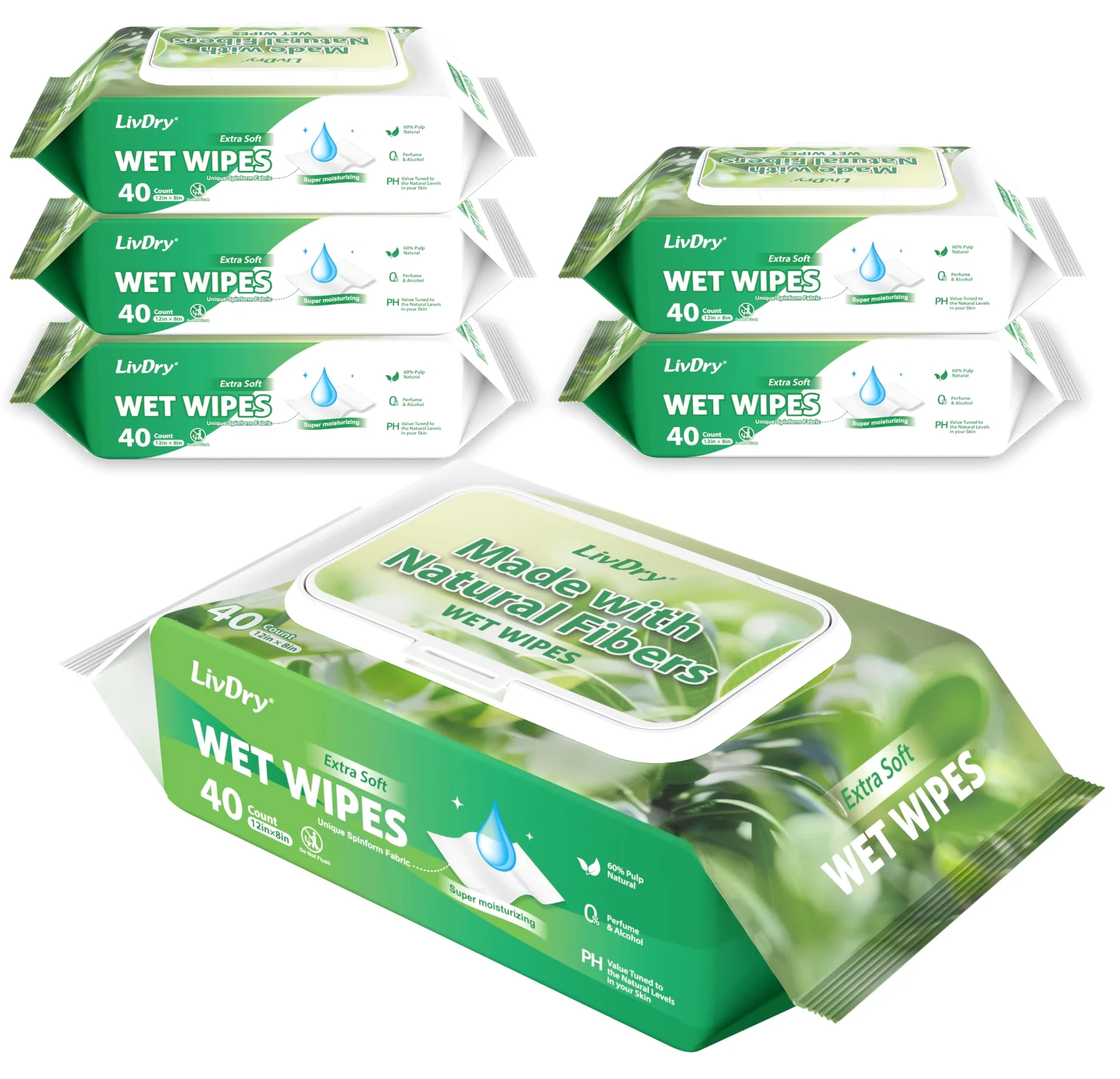
Our Adult Wet Wipes help when the bathroom is a room away. Each one is 12 by 8 inches, the size of a washcloth, with a lotion balanced to the pH of skin and a neutral scent. Wipe front to back with a fresh wipe for each pass, pat dry, and put used wipes in the trash, never the toilet.
A routine that heads off accidents
Some of the most useful care has nothing to do with products. The National Institute on Aging suggests reminding the person to go to the bathroom every two to three hours, and showing them the way. Loose clothing that is easy to take off helps too, because buttons and zips cost time a parent may not have. For accidents that still happen, the institute recommends adult disposable briefs or underwear, along with washable bed protectors and waterproof mattress covers that make the clean-up easier.
MedlinePlus adds a rhythm for the products themselves. Change pads or underwear regularly even when they seem dry, and set aside time to change two to four times a day at the same times every day. Lining those changes up with the bathroom reminders gives the day a shape your parent can follow, and gives you fewer surprises.
At night, our Disposable Bed Pads go on top of the sheet under the hips, 30 by 36 or 36 by 36 inches, with a waterproof back. For someone who stays in bed, roll them to one side, lay the pad half flat and half rolled, roll them back over it and smooth it out. The guide to dry nights covers the full overnight setup.
| When | What to do | What helps |
|---|---|---|
| Every two to three hours | A bathroom reminder, and show the way | Loose clothes that come off easily |
| Two to four set times a day | A change, even if the product seems dry | Pull-up or brief with tabs, Hyper insert |
| After every leak | Clean, pat dry, barrier cream | Wipes 12 x 8 in, mild soap, cream with zinc oxide |
| Bedtime | A fresh brief, a pad on the sheet | Bed pad 30 x 36 or 36 x 36 in, waterproof mattress cover |
When to call the nurse or the doctor
Some changes are a sign to pick up the phone. MedlinePlus says to contact a provider if severe skin irritation develops, and its pages on incontinence care also name a rash, sores, burning or a fever as reasons to call. When cleaning, drying and cream are not enough to settle the skin, that is the moment for the nurse or doctor, not for a stronger product.
The leaks themselves deserve a second look whenever they change. On that point, the National Institute on Aging reminds caregivers that a doctor can help figure out why incontinence is happening, and sometimes treat it. Your notes on when leaks come and how much give that visit something to work with, so keep them going from the first week.
And look after the person doing the lifting. Caring for a parent day and night is heavy work. A product that suits the change, a routine you can keep and a doctor who knows the full picture make each day lighter for both of you. The LivDry caregivers shelf gathers the briefs, inserts, bed pads and wipes in one place.
Every product named here is part of LivDry absorbent care.